
Published on:
November 11, 2025
Agentic AI Drives a Strategic Shift in Automotive Retail for 2026
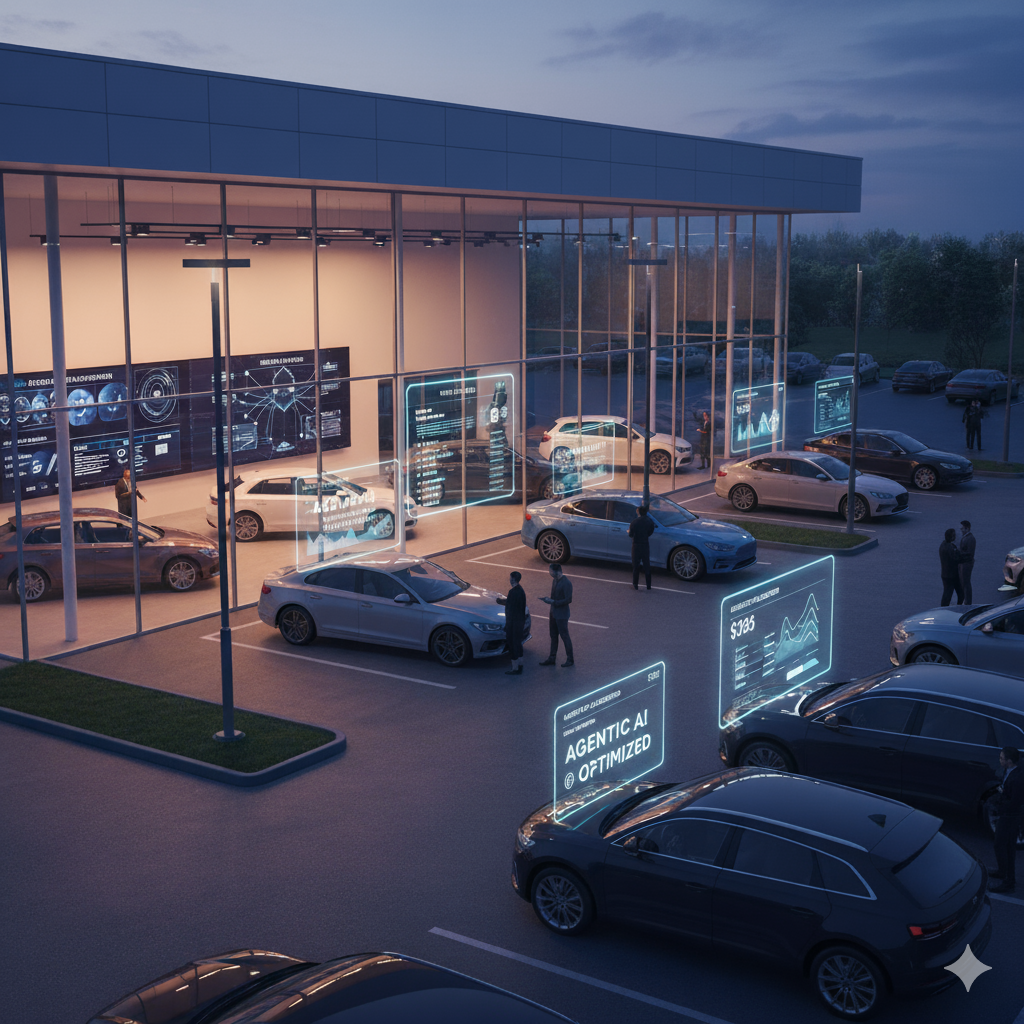
The countdown to 2026 signals a fundamental change in the retail automotive sector: the mainstream adoption of Agentic AI. Unlike traditional rule-based automation, Agentic AI systems are designed to not only analyze data but also to act autonomously, adapting to real-time conditions and making independent decisions. This transition is moving dealership workflows from a "co-pilot" model to an "autopilot-augmented" operating system.
For dealer groups, general managers, and retail automotive executives, embracing this shift now is key to realizing dramatic returns in efficiency, speed, and competitive advantage. The industry's push toward lean, real-time, data-rich operations makes it an ideal environment for Agentic AI to excel.
Agentic AI: The Evolution from Generative to Action
Agentic AI fundamentally differs from earlier AI by integrating Large Language Models (LLMs), decision-making agents, and continuous data loops. This allows the system to initiate and coordinate complex tasks across fragmented systems (CRM, DMS, Inventory, Service) and engage humans only for exception handling or high-judgment tasks.
In automotive retail, where fragmented workflows—from lead generation and inventory management to F&I packaging and service retention—create bottlenecks and margin pressure, Agentic AI acts as the crucial lever for unification and efficiency.
Three Core Autonomous Workflow Domains for 2026
We anticipate Agentic AI will be most disruptive and beneficial across three primary domains:
1. Sales and Lead Engagement: From Inquiry to Delivery in Minutes
Agentic AI will revolutionize the customer engagement "first mile." Agents will autonomously:
- Qualify Leads: Analyze incoming chat/web interest, match it to inventory, and generate personalized payment proposals.
- Coordinate Process: Trigger documentation prep and push relevant data to the F&I desk immediately after lead qualification and trade-in computation.
- Outcome: Dealerships can expect the lead-to-delivery timeline to collapse from hours or days into minutes, leading to higher conversion rates and lower overhead for digital BDC operations.
2. Inventory and Pricing: Real-Time Optimization
Managing carrying costs is critical. Agentic AI addresses this through:
- Dynamic Pricing: Continuously adjusting retail price, incentive allocation, and trade-in allowances based on real-time market signals (competitor listings, auction activity, consumer search behavior).
- Autonomous Merchandising: Automatically triggering necessary actions for slow-moving units, such as marketing campaigns, price drops, or inter-rooftop transfers—with pre-set human oversight.
- Outcome: Reduces aging inventory and associated carrying costs, translating into a material increase in profitability across the dealer group.
3. Service & Retention: Predictive, Personalized Engagement
The post-sale ecosystem will shift from reactive to proactive:
- Predictive Maintenance: Agents monitor vehicle usage, telematics, and service history to proactively schedule necessary maintenance and service appointments.
- Intelligent Upselling: Agents identify opportunities to intelligently recommend aftermarket products or extended warranties based on customer and vehicle data.
- Outcome: Improved customer retention rates, increased service revenue, and enhanced Customer Lifetime Value (CLV).
Governance: Designing the 'Agent + Human' Team
Full autonomy in a high-risk, regulated environment like automotive retail is impractical. Successful deployment relies on designing a responsible hybrid workflow—the "Agent + Human" team:
- Agents (Tier 1): Handle routine tasks, execute autonomous actions (e.g., auto-order parts, schedule test drives), and monitor real-time dashboards.
- Human Overseers (Tier 2): Manage exception flags, validate high-risk decisions (especially in F&I and compliance), and refine the agent's behavior through feedback loops.
- Governance: Mandatory audit trails, explainability logs, and human-in-loop checkpoints for regulated processes are essential to manage compliance risk and build trust.
Actionable Path for Leadership
To capture the competitive advantage in 2026, leadership must act decisively:
- Re-architect Workflows: Do not simply bolt AI onto old processes; re-design entire workflows with agent-human collaboration as the core principle.
- Strengthen Data Foundations: Agentic AI is gated by data quality. Prioritize the cleanliness and unification of CRM, DMS, and inventory data.
- Define Governance: Establish clear decision thresholds, audit logs, and escalation paths for autonomous agent actions.
- Reskill Your Team: Employee roles will shift from task execution to "agent-supervision" and strategic planning. Invest heavily in training for this cultural and operational change.
- Pilot Strategically: Begin by piloting high-impact, contained sub-processes (e.g., digital lead scheduling or service-scheduling agents) and scale with proven success in 2027.
The question for automotive leadership is no longer if they will adopt Agentic AI, but how they will re-think their operating model, human roles, and oversight systems to harness its strategic power.